Inside the Heart of Lisbon’s Anarchist Community
In 2025, ‘community’ is a heavy word.
In France, the collective working class community has been making headlines for their nation-wide Block Everything protests, in defiance of the Macron government’s recent new fiscal policies and budget cuts. In much of the United States, communities around the country are serving as some of the last defensive lines in protecting citizen abduction by the country's Immigrant and Customs Enforcement officers. In Berlin, community has been under attack from all sides, from the regular acts of police violence at pro-Palestine community events to consistent attempts to take down squats like køpi and Tuntenhaus, some of the biggest, longest running and most cultural significant of their kind in the city. It seems as though no matter where in the world you are, any community that is countercultural in any sense of the word is seen as a threat.
Though it's not, of course, as if these struggles are unique to today. Though the general sentiment towards counterculture feels more reactionary than ever, it would be ignorant to ignore the fight for survival that is baked into the heart–and built into the brick–of all the places that allow such communities to blossom.
For the past decade, such a place has lived, fought and thrived, burrowed under the ground of Lisbon’s sprawling hills. And right now, it’s fighting for its right to keep living.
From the outside, Disgraça is inconspicuous. Wedged on the edge of the Penha de França neighbourhood, just beyond the grasp of Lisbon’s touristic central hub, the social centre resembles a storefront from its outside, set apart only by the thick layer of stickers plastered to its front doors. These doors stay locked, until the bell is rung. A punk may or may not greet you at the door.
Artin was the punk, and Disgraça member, expecting me. Originally from Iran, Artin has been living in Lisbon for the past 6 years, and has been involved with Disgraça for half of their time in the city. He was also one of the Disgraça members that would soon be setting off on a Europe-wide benefit tour to collect donations for the space. Though we were strangers, I was greeted with a hug and eagerly invited inside.
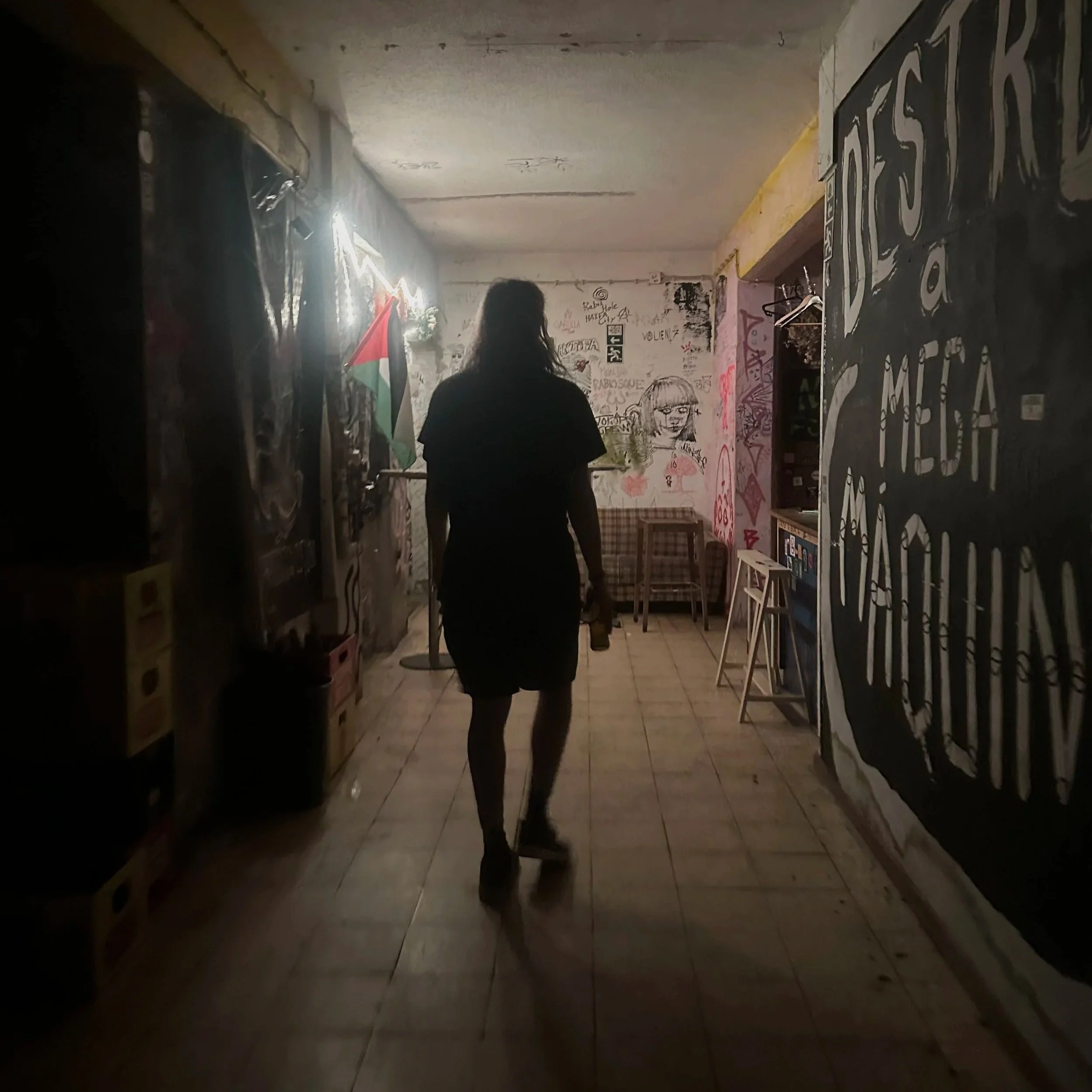
It’s hard to put into words what Disgraça looks like. Even in the moment, while looking at it straight on, it's hard to comprehend what's taking place around you. The moment you pass through Disgraça’s glass doors, it's hard to find a corner free of art, free of clutter, free of chaos. Illustrations and graffiti tags dance up walls and across ceilings. Sticker infestations extrude out of cracks in the concrete. Rope, ribbon and stuffed animals are strung up in web-like formations across the staircase’s railing. Every inch of the space has something to say.
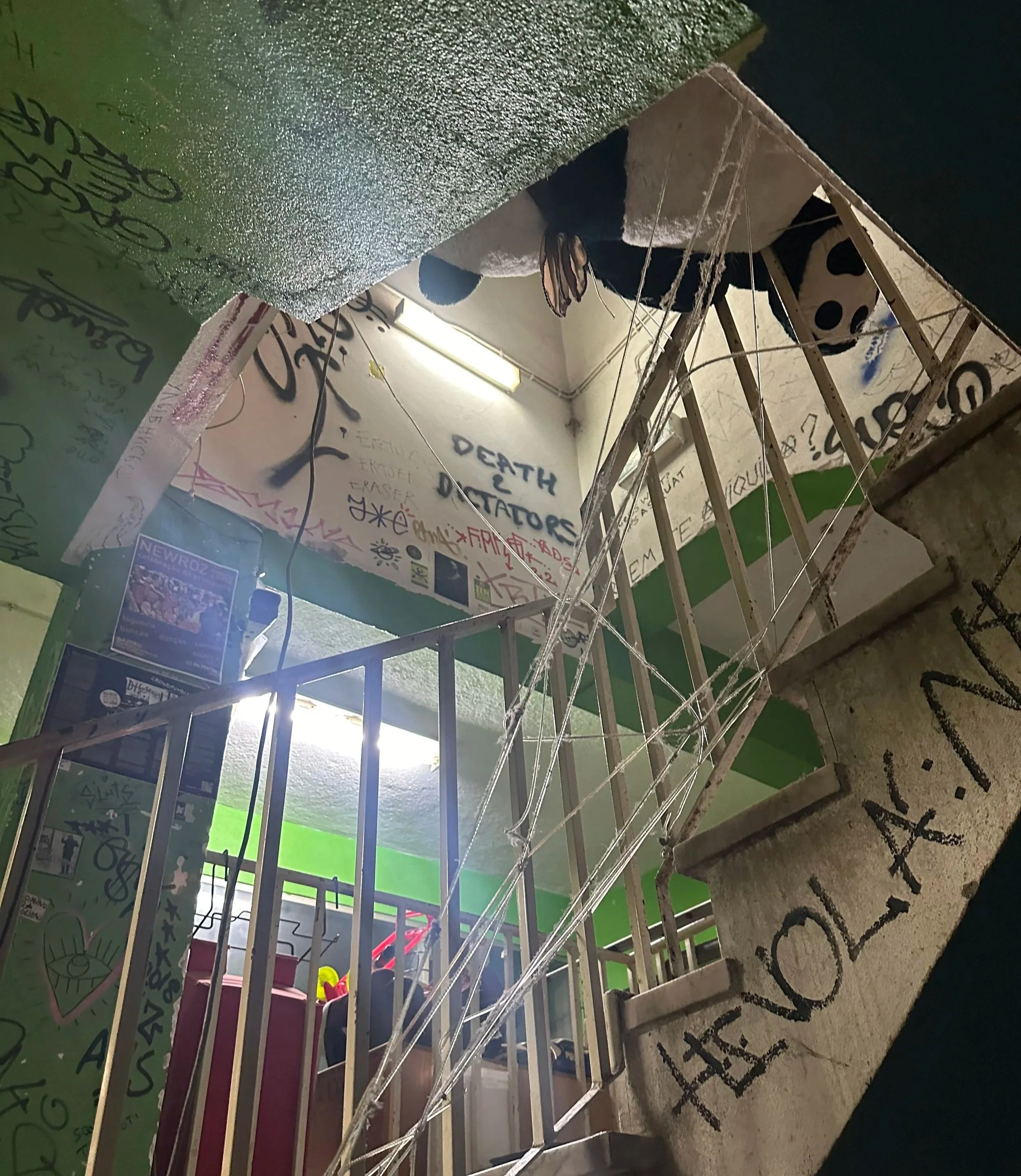
Disgraça’s entrance
Artin began their tour. On the ground floor, the walls were lined with clothes; a donation space, Artin told me, for people to take things and leave things as they please. Next to this, an untouched library, free of people but filled floor to ceiling with books. In a conversation since, I was told that this library space is one of the reasons Disgraça exists in the first place.
“I wasn’t around [when Disgraça was founded], I was in Denmark. But from what I heard, people in Lisbon were doing underground hardcore shows”, Yun told me, another Disgraca member who has been with the space for the past five years. “For this music, there wasn’t really any space in Lisbon where they could go and throw these shows, so they would go to abandoned buildings and throw these parties. But the problem was that police would raid these places and sometimes confiscate the equipment, so people got frustrated and tired of doing things this way. So they looked for a place where this music could have its own space. It started as a combination of this group of people and an Anarchist workers library project called BOESG. These two groups of people came together to build [Disgraça]. The library project is not very active anymore, but we still have all the books”.
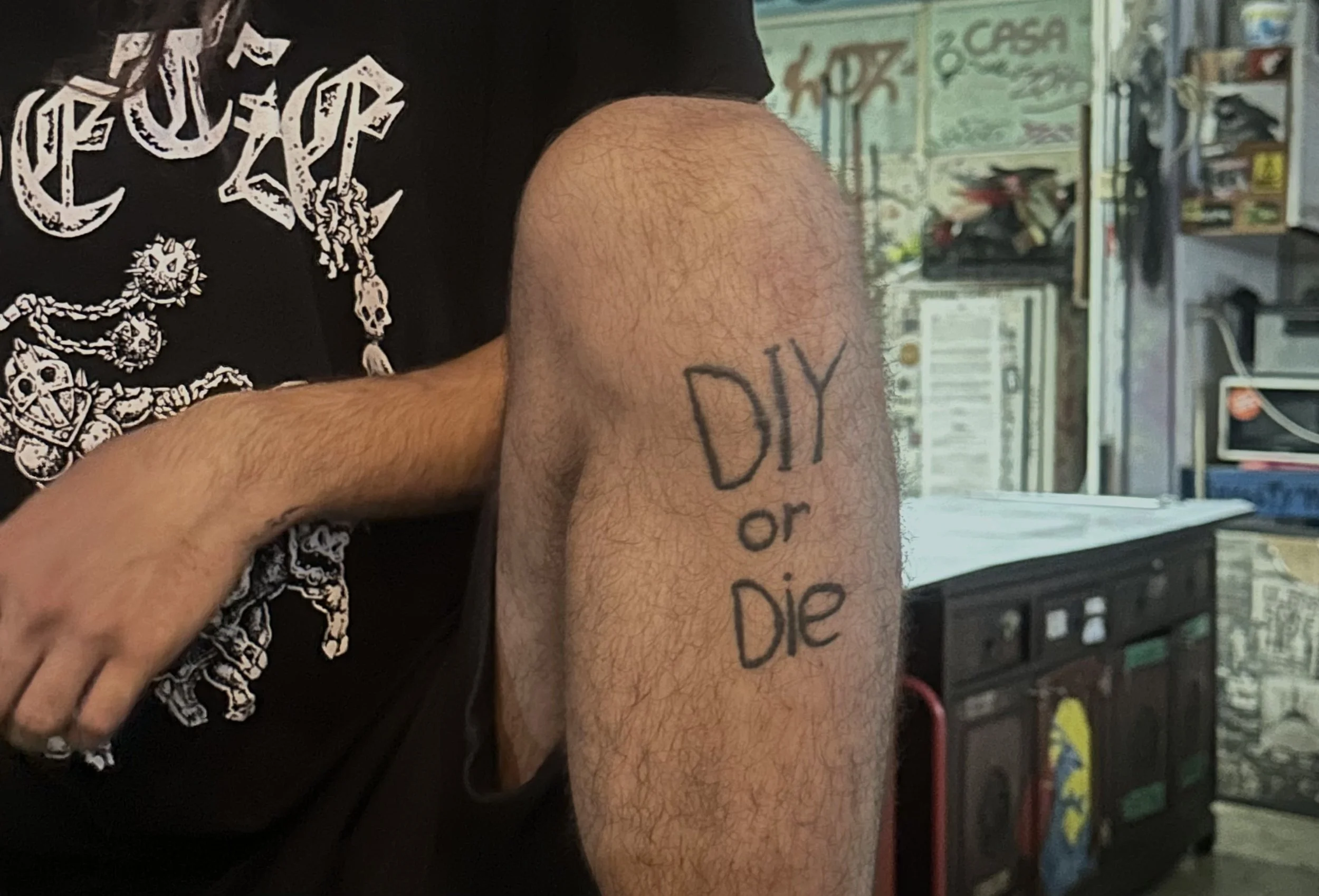
Disgraça, literally, spirals downwards. Sinking deeper into the space, other laughing voices began to echo through the corridor, until the staircase opened onto a wide bar room. Artin offered me a drink, and the aux cord. I was approached by an eager smiling girl in pigtails and a pastel tennis skirt, who introduced herself as Sabrina. She said she liked my nails. A punk with a neon green reverse mohawk, who I later learned was Artin’s partner, appeared with a gift. Inside the box, a diy-ed pair of Doc Martens, studded with spikes and coated in chains. Artin told me later that they were working on a very similar gift for their partner, too: a pair of headphones, studded with the same spikes, draped in the same chains. When Artin put on the shoes, I saw they had a handpoked tattoo that read ‘DIY or die’.
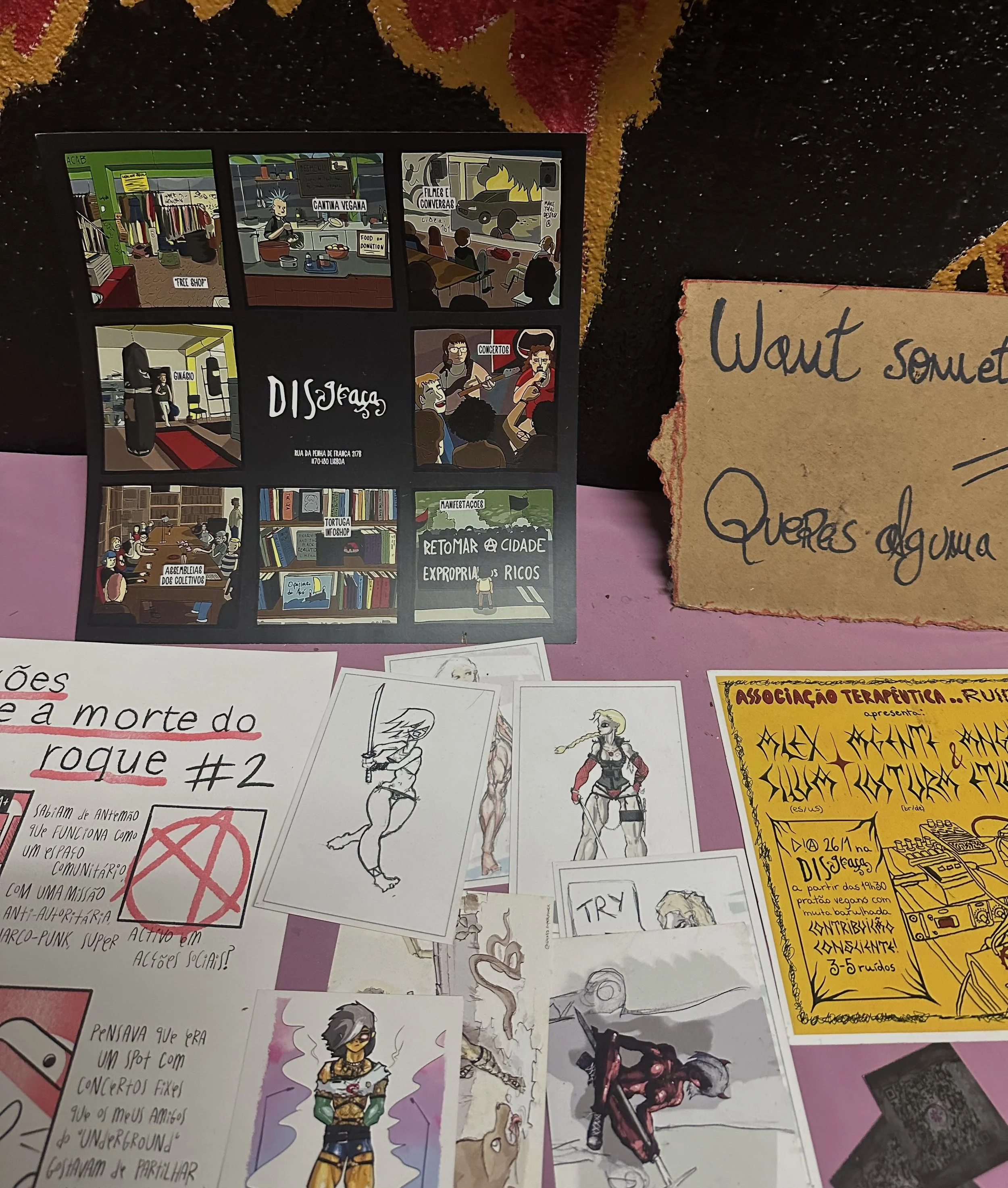
The tour continued. On the edge of the common area was a table filled with shirts, patches, prints and zines, all created by members of Disgraça and sold to raise funds to contribute back to the space. It becomes hard, here, to recall the layout of the centre. There were too many claustrophobic staircases, too many cave-like hallways, and somehow, it felt like we never stopped descending deeper into the ground. I heard a couple members refer to these underground rooms as ‘the catacombs’. It seemed as though Disgraça had a room for every possible hobby; there was a concert hall, a rehearsal space, a space for screenprinting, and a gym, among many, many other multipurpose spaces, all coated in antifa stickers, doodles and leftist slogans.
In our recent conversation, Artin told me about Disgraça’s many initiatives. “[The schedule] changes a lot throughout time. Primarily there is always the kitchen, the concert hall, and the workshops. The rehearsal room and gym are always open to use. But it really depends on the people that come and use the space. Every once in a while a person with an idea for an event will come to us. Ash [Artin’s brother] did the DIY Mondays for a while. Some people hold classes here, too. But concerts, food, benefits, those are our regular events.”
On a more lowkey afternoon, Disgraça likely looks something like it did that day: a group of punks crowding the terrace tables, surrounded by a garden of potted vegetables and herbs, chatting, laughing and drinking beer. To my left, an impromptu fashion show was taking place; someone had just diy’ed a leather vest, and they wanted their friends to try it on. To my right, Artin was chatting with an eager stranger who had also stumbled into Disgraça for the first time; older, with a thick American accent, and dramatically sharing story upon story about his experiences squatting in anarchist centres throughout Japan and Indonesia.
I met Ash, Artin’s brother, who would also be embarking on Disgraça’s benefit tour in August. The siblings wanted to jam in the rehearsal room in preparation for their tour. I asked them what the name of their band was. Artin told me they didn’t really have one, not yet. They were two months out from the tour's start date, and still they were nameless, genreless, with only a few roughly prepared songs, and no definite lineup. They told me they’d figure it out, and I believed them.
In the cavernous rehearsal room the air was thick and stale. I had no idea how Ash could scream in those conditions, but he pulled it off, brutally. The jam session was pure, raw, overwhelming noise, so powerful that even with ear protection I had to excuse myself multiple times. They invited me to try my hand at the drumkit, but I declined, it was time for me to leave. I would see them again soon, anyway, during the Berlin stop of their tour. I was hugged goodbye, and climbed through Disgraça’s mazelike corridors for the last time before meeting Lisbon’s humid evening air once again.
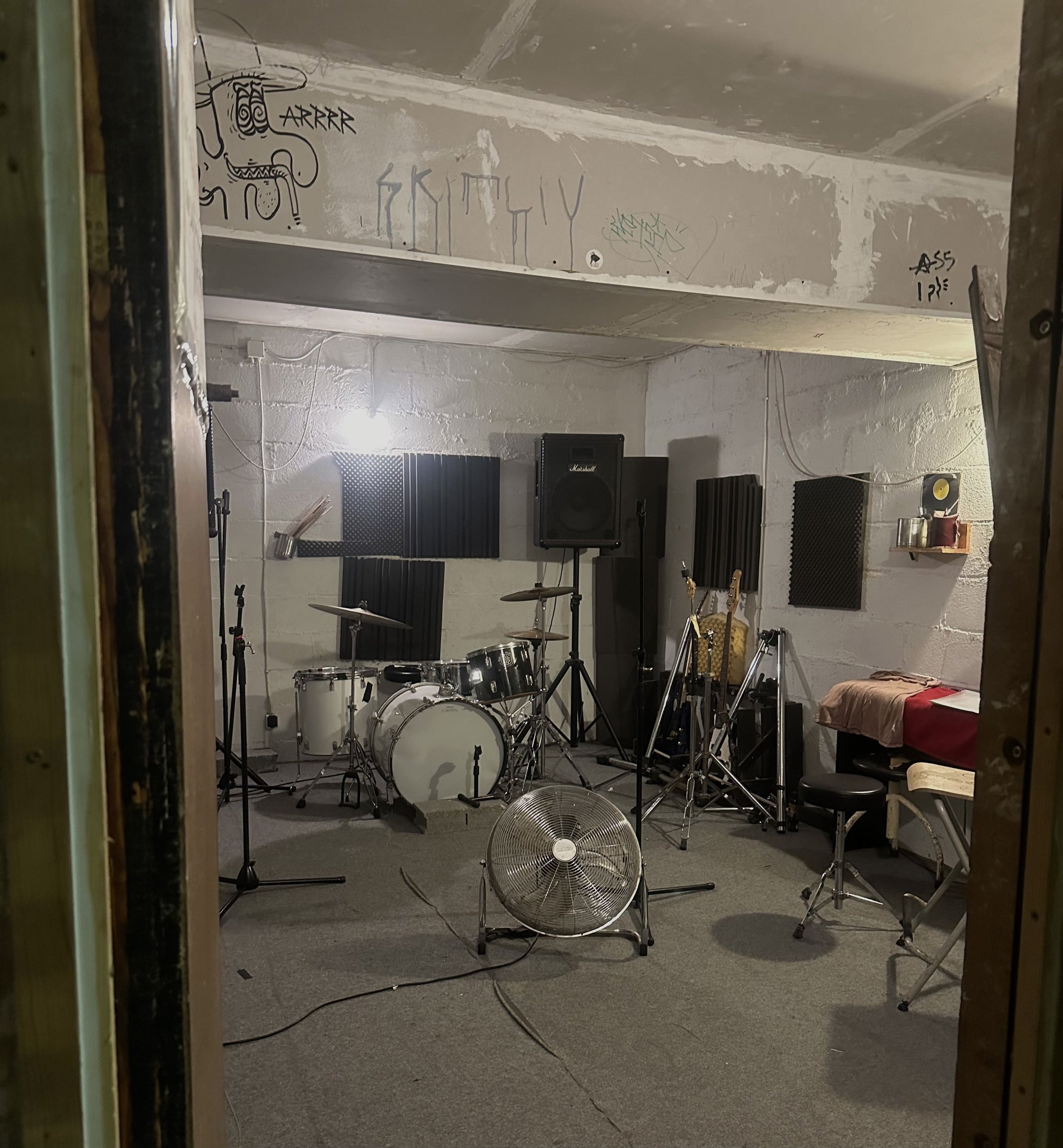
Disgraça’s rehearsal room
The omnipresent upcoming ‘benefit tour’ that sat on everyone's lips that day didn’t just manifest in excitement whispers and eager guitar strums. The benefit tour was just one concrete building block in a long, steep project: after ten years of operation, those within the collective were preparing to purchase Disgraça, once and for all.
“Disgraca, until now, has been paying rent to stay. It’s been surviving because of the long contract it had, but the contract is ending, and it's going to be updated to the new prices of Lisbon, which are crazy now. I guess it’s the most expensive capital in Europe. It’s very difficult to keep a space through that [...] A lot of places that have already secured land really focus on helping other places reach that point. And soon, Disgraça too will become like this”, Artin told me.
The purchase of Disgraça, if successful, is coming at a time when Lisbon is in the midst of one of its biggest housing crises to date. In 2023, Lisbon was found to be the third most expensive capital city in Europe for renting, with prices only continuing to rise. “Because Lisbon is getting gentrified and it's harder to rent and be able to stay in Lisbon, a lot of people I’ve known before that would have come to Disgraça had to move away,” Yun told me. “It’s not in a touristic place, but it's quite inside the city centre. The way [the housing crisis] impacts Disgraça is that some of the people can’t organize here anymore, because they can’t afford to live around here. For some people, rent has doubled in the last 2-3 years. There's been a 40% increase for almost everyone. The way that Disgraça is trying to help with that is by supporting the people who are squatting”.
“A lot [of the events at Disgraça] are for political causes, to support either the local community, like squats or people that need help with paying legal fees, but then also benefits for places outside of Portugal”, Artin added. “It’s the only anarchist centre in Lisbon. It’ll be expensive to lose Disgraça, for the community”.
Artin told me a bit more about the state of renting and squatting in Lisbon.
“The amount of abandoned buildings in this city is crazy. Every third building that you pass by is abandoned. But somebody owns them. Housing is a more valuable asset than money. If you have cash in your hand, it’s more worthless than if you have a house in your name. It’s more profitable for a person to just leave a building abandoned and pay a bit of tax on it when the value of the house is so rapidly increasing, than to let people use it. It’s more comfortable for these buildings to stay abandoned and to keep people on the street”.
“It’s almost impossible to keep a squat in Lisbon, especially if it's quite open, and it's not just a hush-hush squat. There are some laws that are supposed to protect squatters. It’s not as open as Spain, but it’s not the worst laws either. However, all the laws don’t really get [put into] action when you’re identified as a squat. A lot of times the police will just show up and break the door with no permit, they’ll violently evict the squatters, and they’ll block the building. This is against their own laws”.
Though Disgraça is a community space and not a squat, and while it is in good favour with its neighbours, the centre has still been under similar surveillance by police officers in the past. “There were also a couple of undercover cops that showed up over the years, but until now there haven’t been any cases of them infiltrating the structures”, Yun explained. “Beyond that, we don’t have any hostility, really. We’re on good terms with most of our neighbours, they have our phone numbers, so if they’re upset with us for noise or doing an event for too long, they text us, we apologize, we make them cake”.
The sense of community is undoubtedly already there, within Disgraças walls; from its relationship to its neighbours, to its relationship with the city, to its relationship with punk and anarchist scenes worldwide. What comes next: security. “Once we are secure, if money isn’t going to rent, it can inspire other movements, help other people, help everyone establish security for themselves”.
The next time I saw the Disgraça gang was at Zielona Gora, an anarchist venue space in the Friedrichshain neighbourhood of Berlin. The newly named ‘Rosva’ (genre’d as ‘queer immigrant punk’) had just begun their tour, which would be stopping in the likes of Leipzig, Frankfurt, Dresen, Prague and Amsterdam. Artin invited my band to open for them that night. In true punk spirit, the gig was brash, messy, and violent. We didn’t have proper cymbals and we had to use two chairs stacked on top of one another as our drum stool. The crowd’s energy was palpable, much due to the Disgraça members never once taking their feet off of the brakes, be it by dominating the moshpit or shredding apart the stage. Their set was jaw dropping. You would never have guessed that just two months prior, their band was merely an idea.
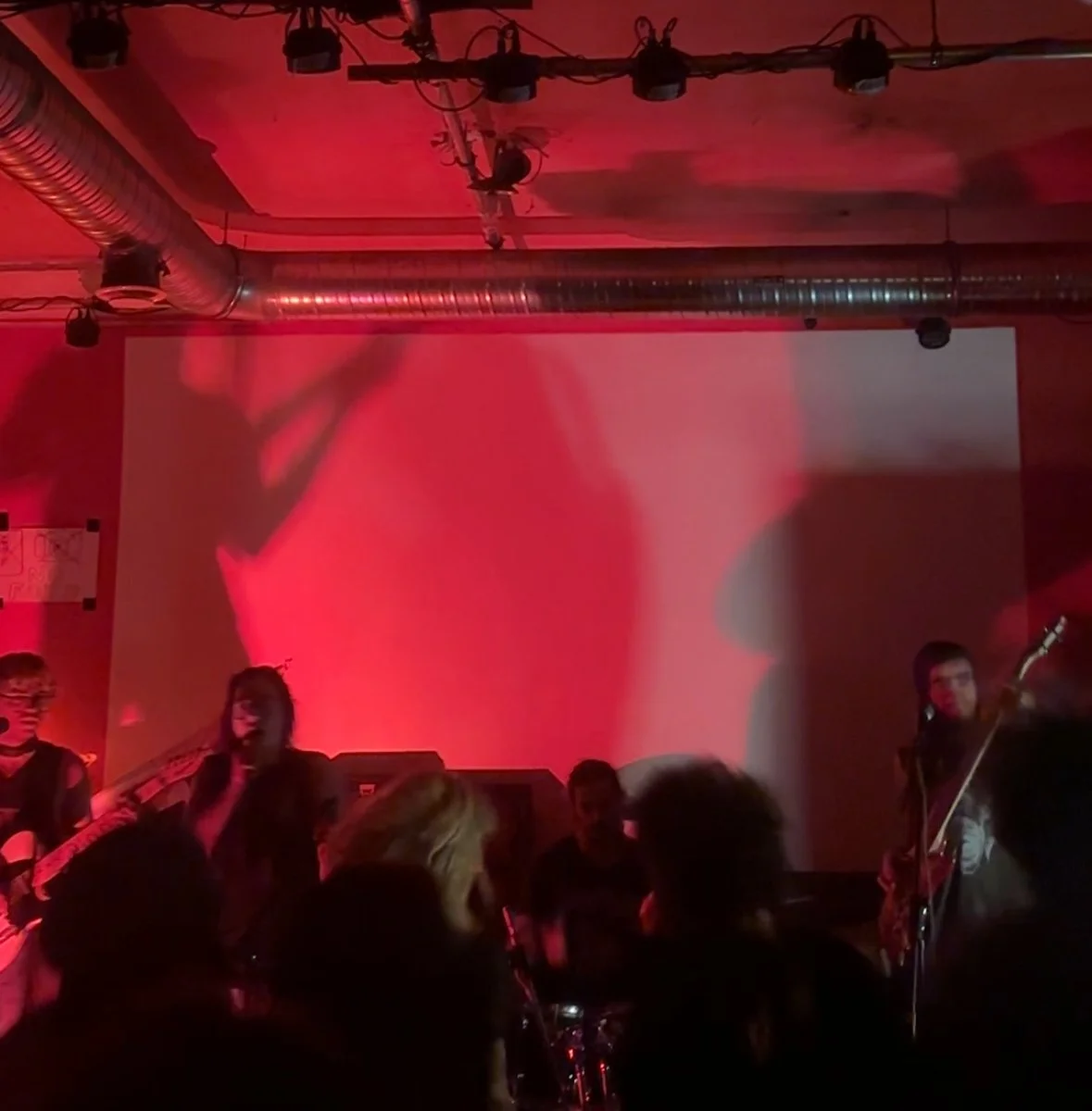
Rosva, live at Zielona Gora in Berlin
Beyond the stage, the evening was a community affair. A vegan küfa (community meal) was offered to the band, the crew, and the attendees alike. Zeta, Artin’s partner, was selling patches, bags and tshirts screenprinted with Disgraça decals, while also offering tattoos. When the long, clunky set up hit inevitable roadbumps, the entire room came together to reach out to the neighbourhood and beyond; other squats and venues were on speed dial, offering favours and support in exchange for instruments, cables and amps. When a couple walked in during soundcheck to inquire about a place to sleep in the squat upstairs, Artin and the gang noticed the instruments in their bags and offered them a place on the lineup, closing out the show. There was never a moment where the room lacked symbiosis. I can’t say I’ve experienced anything quite like it since.
As of writing this, it’s been two months since Rosva’s show in Berlin. The group were able to successfully finish their tour, spreading the gospel of Disgraça all around central Europe, albeit with some rental car shaped bumps in the road along the way.
Lots had changed since we last spoke in Berlin, both within the centre itself, and within the city of Lisbon as a whole.
Artin had an alarming update about the state of squatting in Lisbon, that would directly impact them and their fellow Disgraça members. “While we were on tour, there was an announcement of a new squatters law. Usually, it would take one year for an eviction order to actually go through. Now it’s 48 hours, and the penalty of squatting is even higher. The law is going into action in November. That's going to change how squatting in Portugal is, a lot”.
Despite this, our follow-up was overwhelmingly positive. Regarding the fundraiser to purchase Disgraça, Yun was bubbling with good news: “We have almost all the money! Just a couple thousand left,” they told me through grinning cheeks. “[Owning Disgraca] will benefit everyone. We’re gonna be signing the papers on the 13th of October”.
I inquired about where the funds ended up coming from. According to Yun, the tour itself didn’t generate too many donations, but helped the cause in more indirect ways: “[The tour] spread the word, and we made connections, and people made benefits because they heard about us, from just being out and about”.
Beyond the loans, the tour and the online promotion, a huge portion of support for Disgraça came from the larger punk and anarchist community, not just within Portugal or even within Europe, but from all over the world.
“Sometimes, we didn’t even know [a place would hold a benefit event], we’d just get an email saying: "Hi, we had a benefit for you, we are in Mexico, here's the money!”’, Artin told me. “It was super random. In a lot of different countries, too. In Switzerland, a bunch of places in the US, a lot in Berlin, Amsterdam… [There were] lots of solidarity kitchens, too”. Digging through their Instagram tags, the list of places that held benefits for Disgraça becomes even more immense: Oakland, Utrecht, Ljubljana and Graz, just to name a handful. Within Lisbon itself, the centre received just as much support, with some of the city's biggest nightlife institutions like Outra Cena, Sirigaita, Drama Bar, and Portos Casa Da Horta also holding fundraising events for the space.
It was shocking, and almost emotional, to hear about the overwhelming outpouring of love Disgraça was receiving from all over the world. Perhaps it’s simply all too easy to be nihilistic about the durability of community, after watching so many crumble under the pressure of capitalism, gentrification, and regulation. At its strongest, a community can handle a transplantable heart, carried between the cafes, bars, and community centres that serve as its congregation spaces. If faltering, a community might need to rely on an iron lung; a mechanical, external force maintaining the life force–zoom meetings, collaborative calendars, group chats. But maintaining community in a fast paced world, especially in cities whose institutions feel threatened by ungovernable, grassroots organizing, turns the community into something all too human, all too bruisable. It challenges the community's ability to exist.
That's why healthy, beating hearts like Disgraça are so instrumental to keeping communities alive in systems that seek to dismantle their humanity. Solid, unmovable, plentiful, nurturing. It’s not lost on anyone that has watched their pillars of community be dismantled before their eyes how important it is to keep those that are still alive, thriving. A majority of the people who showed up to Disgraça fundraising events around the world may never get the chance to experience the space themselves, and their regardless support amplifies just how impactful borderless solidarity can be. It's about shared ideals, shared goals, shared visions for the world. It’s about having the backs of those who need it in a landscape where individualism is seen as the only valid method of survival. If we don’t have each other's backs, who will? In Yun’s own words; ‘This is what we want to do, once we buy the place! We want to have a bunch of solidarity events as well. Once we have no rent and we’ve paid off all the stuff, we can have events that will send money out there, to all those that need it’.
Artin, Yun and I ended our conversation by discussing Disgraça’s legacy. Regarding their fondest memories in the space, Artin told me “I always have so many good memories using the rehearsal room. Some jam sessions, some practices, whatever I do in there, I just have really good memories. And sometimes, if it’s just been a shitty week, it's nice to know there'll be a gig happening here, with some nice bands, and there's always a sense of relief from all of the stress and issues I’ve been going through”.
Yun shared a recent touching experience. “In the past two weeks, there were two Palestinian women that came for two separate events. It’s hard to call it a ‘favourite’ thing, because it was really tough to hear their experiences, but seeing that, at an event we organized, these super powerful women were there and telling us about their incredible work, and that we were able to make money for them, and we made a bunch of fucking money, its something to be proud of”.
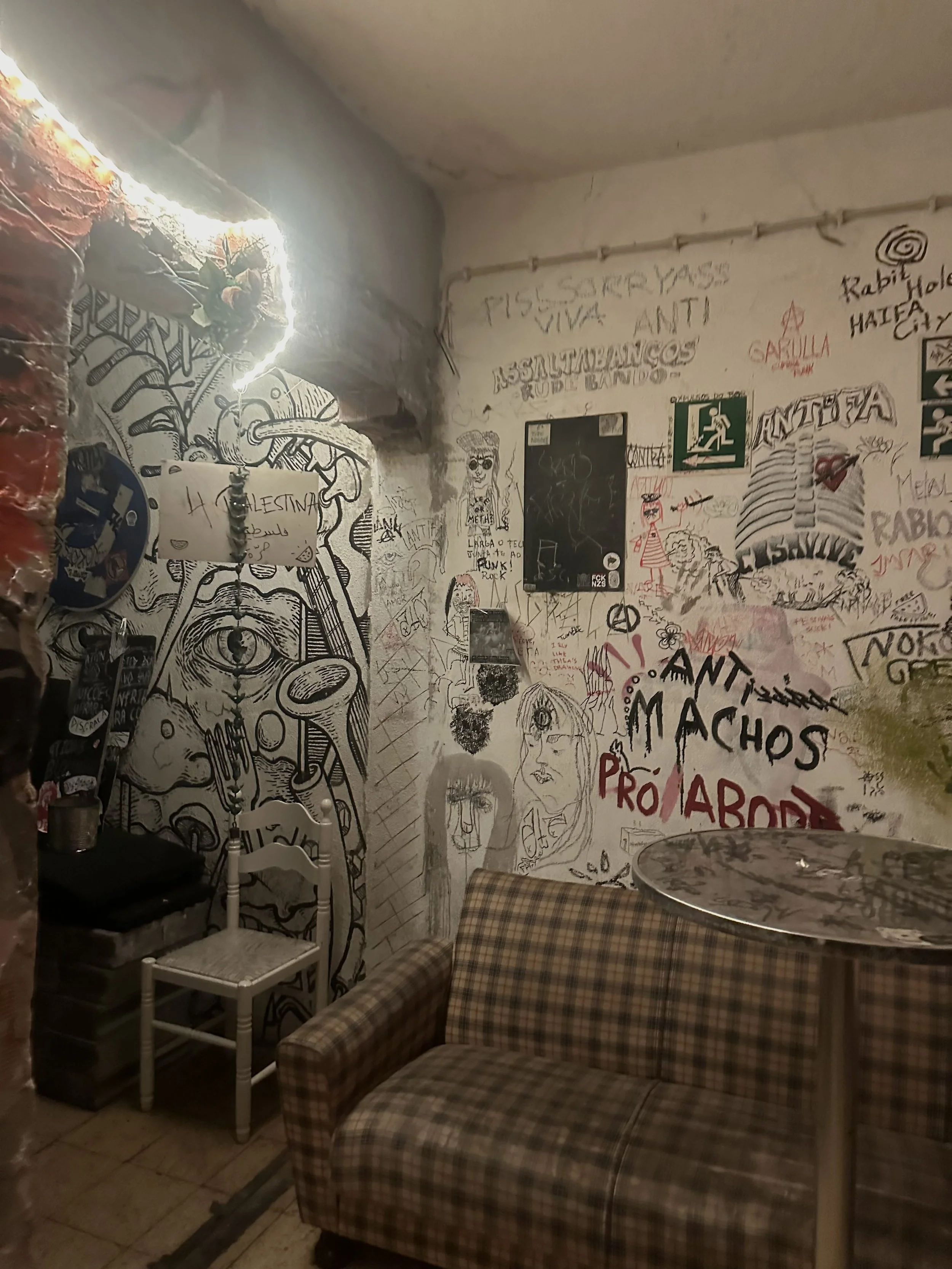
On the weekend of October 25th, Disgraça hosted their ten year anniversary party. The purchase of the building has concluded successfully.
During a week of what should have consisted of celebration and relief, multiple members of Disgraça’s community were evicted from their squatted housing by Lisbon’s police. In the weeks since the first draft of this project was written, squatting had been criminalized in Portugal.
In a society so set on eliminating any form of community it deems as unacceptable, is it possible to make any form of progress without being forced two steps backwards in the process? It’s a hard idea to swallow and an impossible question to answer. Such an answer could not even begin to be tackled on a small scale, despite all the ways places like Disgraça might fight tooth and nail to try. Progress will take time. Whether structures will be toppled by force or merely by waiting for them to crumble is anyone's guess.
What remains true for now: many of Lisbons buildings are sitting empty, unloved and cold. Spaces that could hold life and burn lively with community will remain smothered under the thumbs of those that view warmth and security as a privilege.
What also remains true: community spaces will flourish, perhaps even eternally, if they are offered the right environment to feed their fire. We can only hope that one day Lisbon, and the world as a whole, will once again become forgiving enough for more Disgraças to be born.